Exploration Project / Goodbye Stamp
Designing distance into digital memory
My scope
I developed the project from concept through interaction exploration and working prototype, as the solo designer and engineer.
I explored:
- How digital relationships differ from relationships in the physical world
- Different ways a system could represent "goodbye"
- A physical stamp as the primary interaction rather than another UI control
- How the physical object could communicate directly with a phone or web interface
- A time-based system that changes digital memories after goodbye
- A functional prototype that progressively transforms photographs based on time
- Vibe-coding the interface in Cursor, and using machine learning to recognise the stamp
The project became less about deleting someone and more about one interaction-design question:
What should actually happen when we say goodbye in a digital world?
In the physical world, relationships naturally acquire distance.
Someone leaves. You stop seeing them. Objects disappear from everyday life. Memories become less vivid. Saying goodbye often creates a real boundary between what came before and what comes after.
Digital relationships behave differently.
After saying goodbye, someone can still be one search away. Their photographs remain perfectly intact. Old conversations are immediately accessible. A relationship may have ended, but its digital representation hasn't changed at all.
The digital world remembers everything at the same intensity. Humans don't.
I started exploring whether technology could recreate some of the distance that happens naturally in real life.
The year AI became ambient
This was 2024, when AI stopped being a feature you opened and started becoming something present in the room. That shifted the question. If a system already watches how we behave, it is no longer a neutral archive — it is an omnipresent eye, tracking our patterns everywhere.
So I gave that eye a voice. In the film, the system is the one that notices, and the one that asks:
Do you still want to be stalking this person?
Concept film — 49 seconds, with sound. The AI speaks in its own voice.
Because that is the behaviour worth paying attention to. People scroll and search for someone they no longer know, long after the relationship ended. Blocking does not solve it — a block can always be undone. The behaviour is quieter and more persistent than any setting, and it is exactly the kind of thing a product usually leaves untouched.
The obvious solution would have been to block someone or delete their content.
But that felt too simple.
Three questions became much more interesting:
That shifted the project from designing a filter into designing a physical–digital ritual for closure.
What does a digital goodbye actually look like?
Before deciding how the system should work, I explored different interpretations of what should happen to someone's digital presence after goodbye.
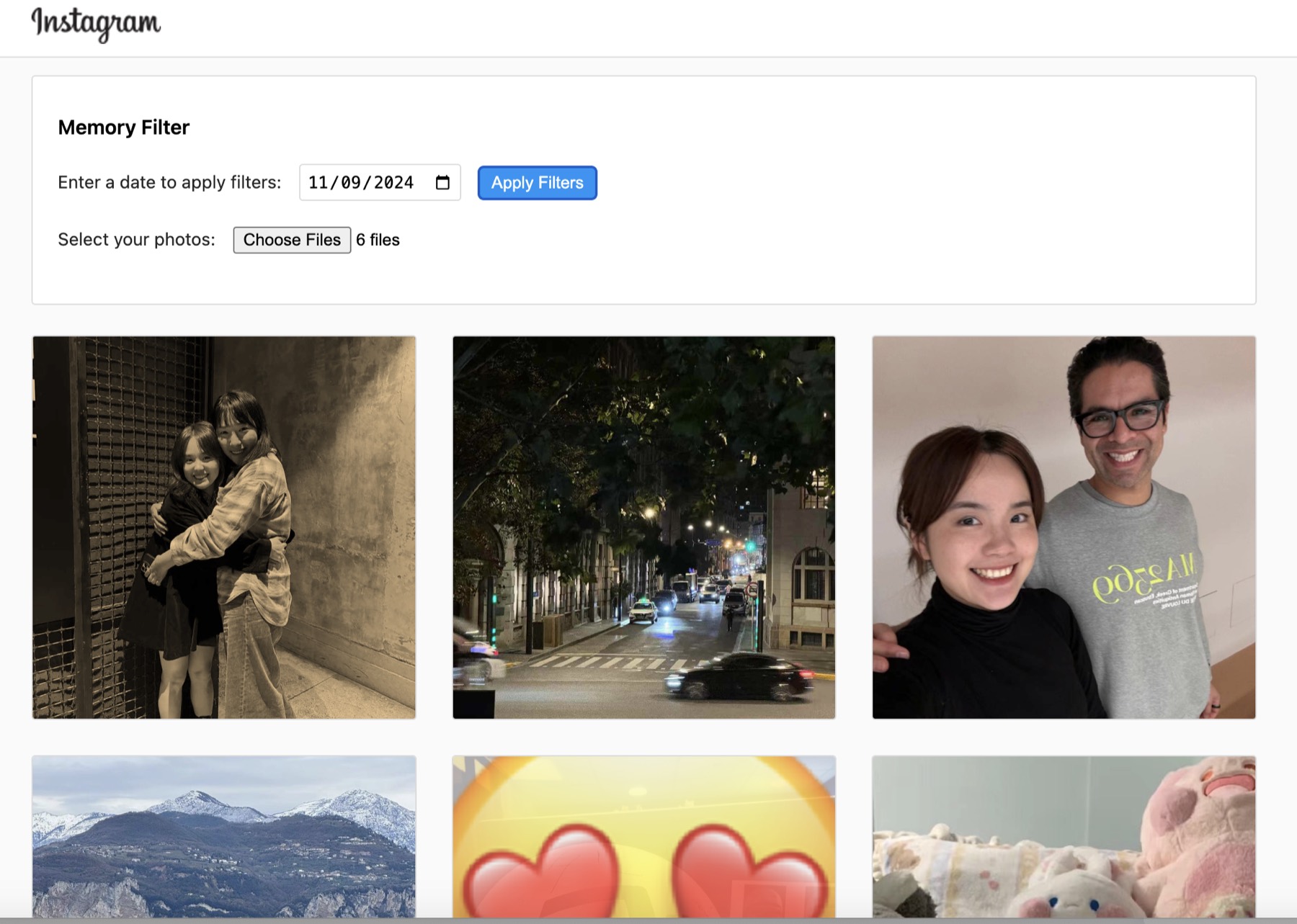
Emoji, deletion, expiration and fading explorations.
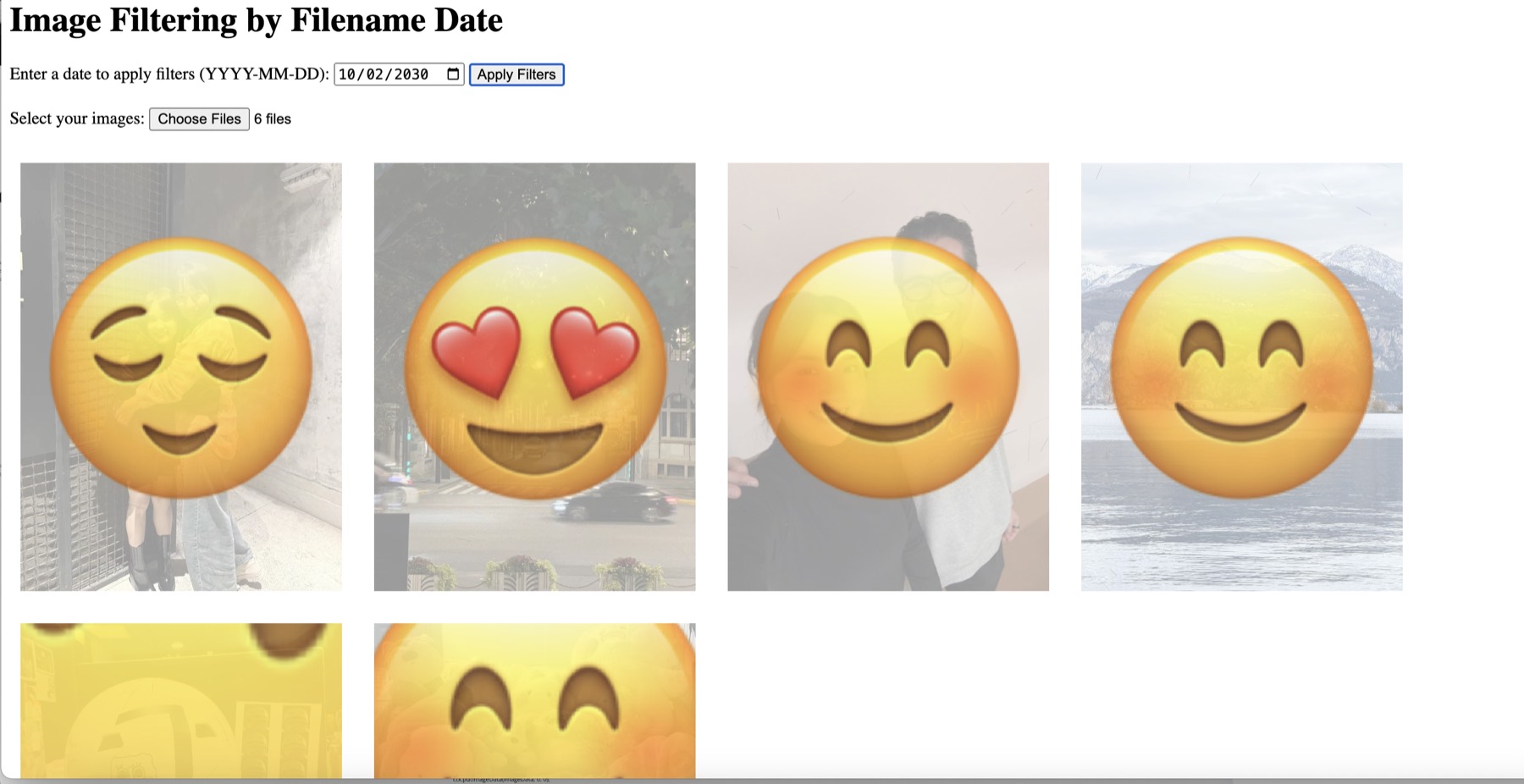
Covering the image is immediate, but it hides the memory rather than letting it recede.
The experiments led to a key decision:
Closure isn't the same as erasure.
Real memories rarely disappear because we decide they should. They recede.
So rather than deleting the past, I decided to let the digital memory age.
Rather than another button, I wanted goodbye to become a physical gesture.
Once the behavior was defined, the next question was how someone should initiate it.
I didn't want such an emotionally deliberate decision to become another menu item: Settings → Relationship → Goodbye.
In the physical world, closure often involves an action: returning something, writing a letter, closing a door or saying goodbye face to face.
I designed an actual Goodbye Stamp that can be pressed against a phone or computer interface.
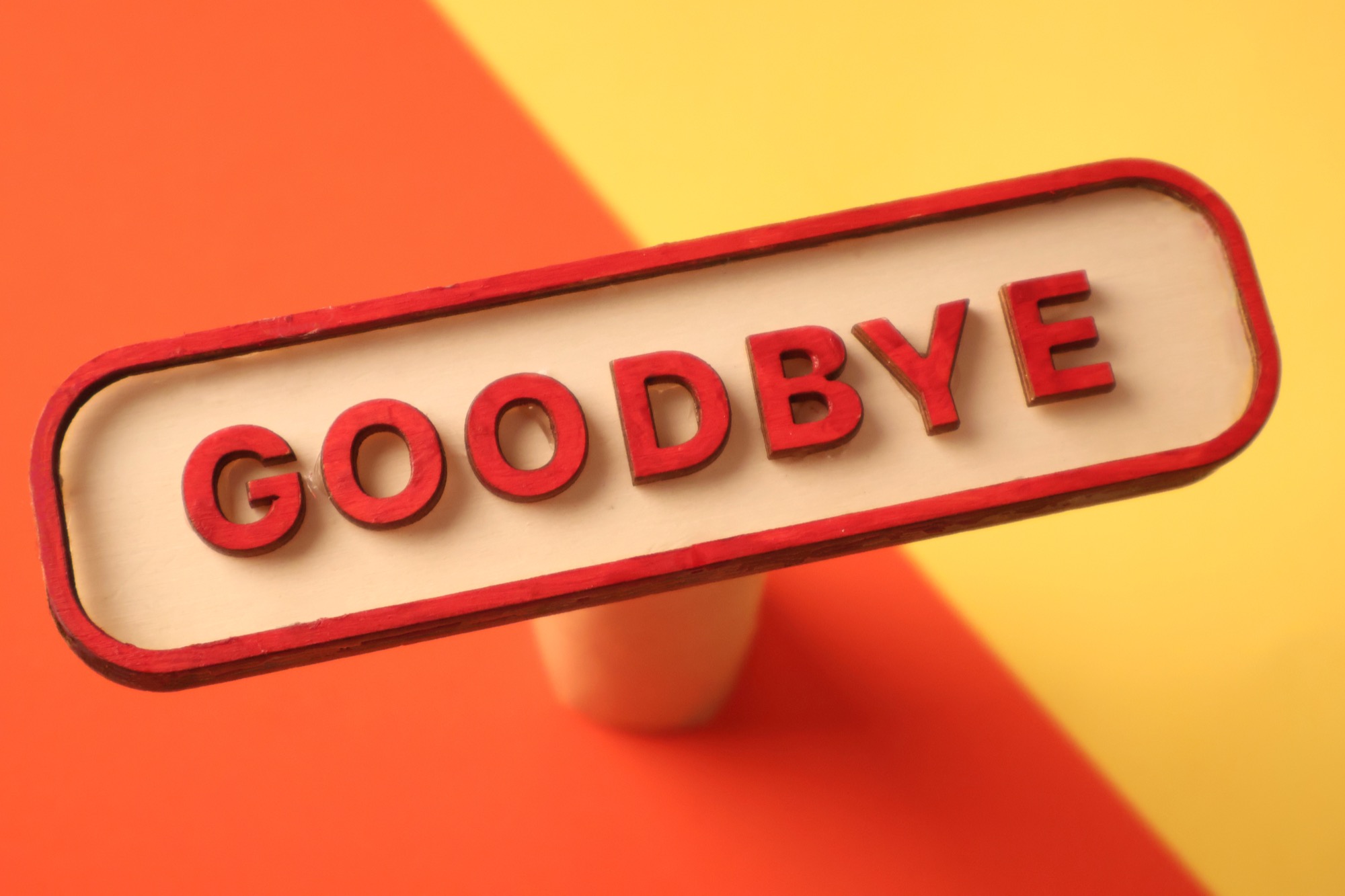
The physical stamp.
When the interface recognizes the stamp, it registers the goodbye and immediately responds on screen.
The interaction intentionally introduces something digital products usually remove: friction, intention and finality.
The stamp doesn't delete the past. It starts time.
The final interaction connects one physical moment to a digital process.
Stamp → recognition → fade.
The object is therefore not a remote control for the interface. It is the interaction.
- The physical stamp creates the boundary.
- The timestamp gives that boundary a beginning.
- Time determines what happens afterwards.
Designing memory as a changing state
The goodbye timestamp became the foundation of the interaction model.
Instead of content having two states — Visible / Deleted — I designed it as a progression:
The further the user moves away from the goodbye moment, the further the memory moves away visually. This makes time itself part of the interface.
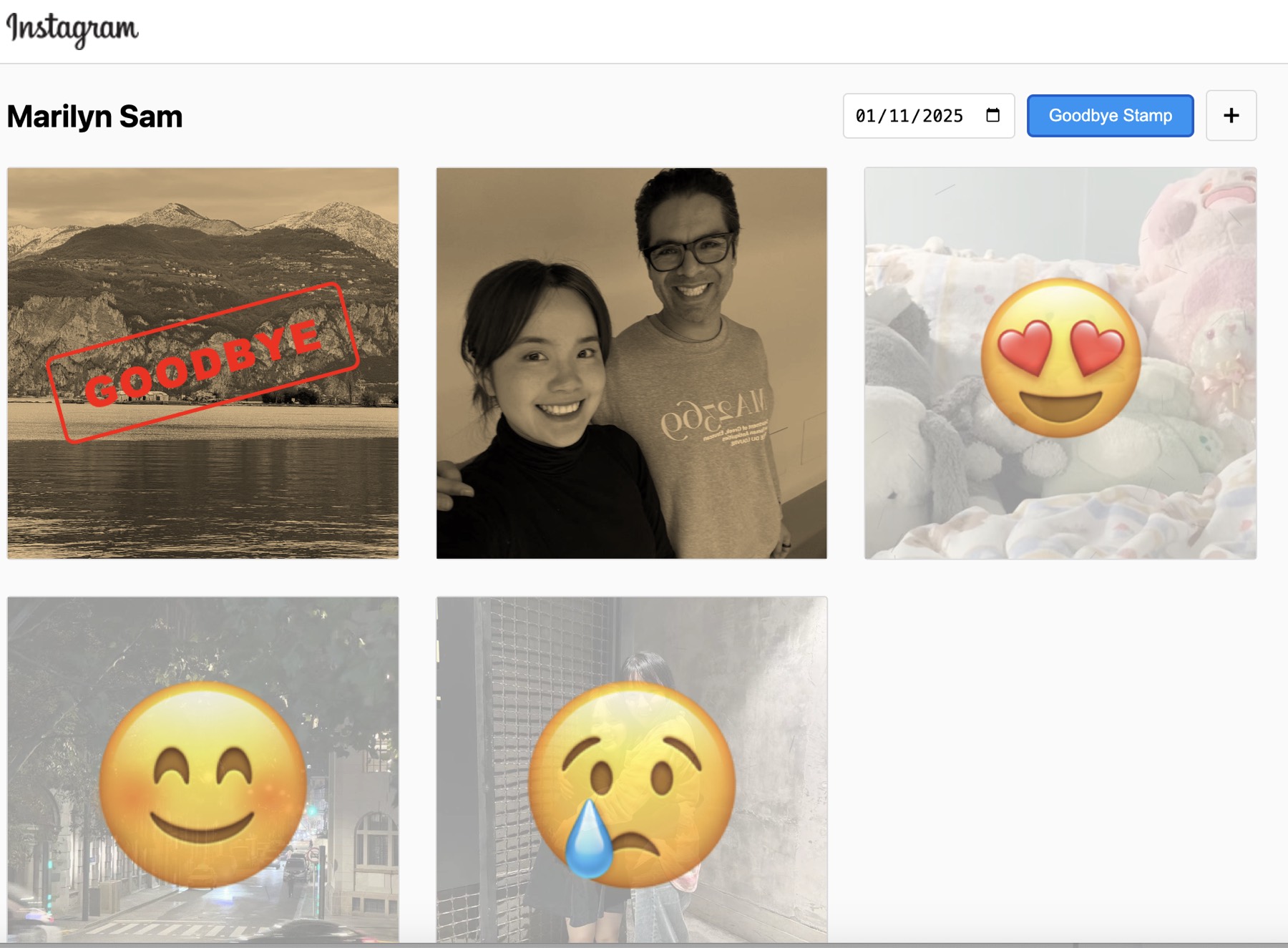
The same photograph across several stages of degradation.
Rather than asking the user repeatedly to resist looking back, the environment gradually changes around the decision they already made.
Prototyping the system
I then built a prototype to test whether this behavior could exist beyond a storyboard.
I built it myself. I vibe-coded an interface that mimics Instagram in Cursor, wired up the interactions, and trained a model to recognise the physical stamp when it meets the screen. Working this way meant the exploration happened in running code rather than in static frames — I could feel whether the behaviour was right, not just look at it.
The prototype reads the date associated with an image and compares it with the defined timestamp. As more time passes, the interface applies progressively stronger visual transformation to the photograph.
Goodbye Stamp became a physical–digital system built around one deliberate moment.
Designing across physical and digital interaction
The project ultimately became one connected interaction model:
- User chooses to create a boundary
- A physical gesture makes that decision deliberate
- The interface recognises the stamp
- A goodbye timestamp is created
- Content responds immediately
- Digital memories progressively change with time
Digital products are largely designed around one assumption: preserve everything, forever.More storage, more history, easier retrieval and fewer reasons for anything to disappear.
But permanence is itself a design decision. This project made me interested in designing not only how technology helps us access things, but also how it can help us create distance from them.
Building it in 2024, with AI doing much of the construction, changed what I could explore. A great deal of this project was exploration that only existed because the tools were fast enough to try things in working code — the interface, the recognition model, the fading behaviour. The speculation and the prototype could develop together rather than in sequence.
It also left me with the question the film asks. If a system is already watching closely enough to know who we keep returning to, the design question is no longer whether it can tell us. It is what it should do with that knowledge, and whether it should help us stop.
What should technology help us forget?
Goodbye Stamp explores an alternative to permanent digital memory: a system where ending a relationship does not erase what happened, but allows its digital presence to change as the person moves forward.